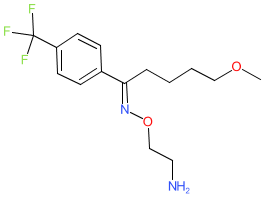
fluvoxamine 
GtoPdb Ligand ID: 7189
|
Synonyms: Luvox® | U-23000


fluvoxamine is an approved drug (FDA (1994))
Compound class:
Synthetic organic
Comment: Fluvoxamine is an antidepressant belonging to the selective serotonin reuptake inhibitor (SSRI) drug group.
Marketed formulations may contain fluvoxamine maleate (PubChem CID 9560989). SARS-CoV-2 and COVID-19: Evidence that is emerging from randomised, placebo-controlled clinical trials [6] suggests that fluvoxamine may offer potential as a therapuetic for non-hospitalised COVID-19 patients. Multiple fluvoxamine mechanisms of action may be at play [10], and much remains to clarified about the patients who would benefit most, efficacy in infections with different SARS-CoV-2 variants, and whether fluvoxamine's effect occurs in addition to the benefit demonstrated by other therapies. 
Ligand Activity Visualisation ChartsThese are box plot that provide a unique visualisation, summarising all the activity data for a ligand taken from ChEMBL and GtoPdb across multiple targets and species. Click on a plot to see the median, interquartile range, low and high data points. A value of zero indicates that no data are available. A separate chart is created for each target, and where possible the algorithm tries to merge ChEMBL and GtoPdb targets by matching them on name and UniProt accession, for each available species. However, please note that inconsistency in naming of targets may lead to data for the same target being reported across multiple charts. ✖ |
|
|||||||||||||||||||||||||||||||||||






Creative Commons Attribution-ShareAlike 4.0 International License