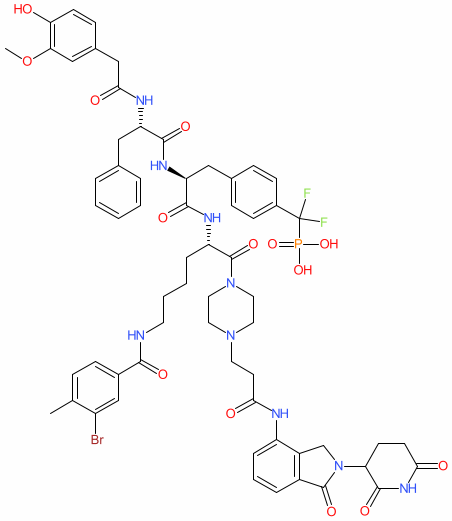
PTPN1/2 PROTAC X1 
GtoPdb Ligand ID: 14701

Compound class:
Synthetic organic
Comment: This compound is a cereblon-based dual PROTAC of the phosphatase proteins protein tyrosine phosphatase non-receptor type 1 (PTPN1; PTP1B) and protein tyrosine phosphatase non-receptor type 2 (PTPN2; TCPTP) [1].

Ligand Activity Visualisation ChartsThese are box plot that provide a unique visualisation, summarising all the activity data for a ligand taken from ChEMBL and GtoPdb across multiple targets and species. Click on a plot to see the median, interquartile range, low and high data points. A value of zero indicates that no data are available. A separate chart is created for each target, and where possible the algorithm tries to merge ChEMBL and GtoPdb targets by matching them on name and UniProt accession, for each available species. However, please note that inconsistency in naming of targets may lead to data for the same target being reported across multiple charts. ✖ |
|
|||||||||||||||||||||||||||||||||||
| Immunopharmacology Comments |
| Concomitant inhibition of the phosphatase activity of PTPN1 and -2 is proposed for cancer immunotherapy, based on the roles of these enzymes in regulating T cell activation and tumour antigen presentation. |




Creative Commons Attribution-ShareAlike 4.0 International License